A Blog About Sourcing Product From China,China Sourcing Legal Services, China Sourcing Guide, china sourcing knowledge, China Sourcing Legal Issue, China Sourcing Quality Control
Sourcing in China often allows for substantial savings. However, thousands of importers lose their shirt every year because they were not aware of the high risks of their activity.
Jacob Yount explains why it can be so hard to get colors right. He explains what type of standard to send to the factory, and how to communicate tolerances.
Toys importers still can’t find an alternative to China, and are under more and more pressure to ensure they are safe. Testing laboratories will have more and more work as regulations get stricter.
The share of Chinese companies in China’s total exports has been growing rapidly. It is about to surpass the share of foreign-funded companies.
What does this trend indicate? That China needs foreign firms less and less. Local competitors are better and better at reaching foreign markets. In 10 years we won’t be surprised to find some Chinese companies do proper market research and launch sleek brands in Europe and in the US.
When it comes to mechanical and/or electrical products, importers often wonder what level of perfection they should aim for when it comes to pre-production prototypes.
Chinese manufacturers can move very quickly for a few weeks, and then get distracted by another shiny project. And many projects get stalled after the buyer asked for one or two revisions that became obvious once prototypes were made. Therefore it sometimes makes sense to start with a very simple prototype version, to move fast and keeps the investment low.
There are three main types of prototypes you should consider:
Working Prototype or ‘works like’
Non-working Prototype or ‘looks like’
Works like / Looks like
Which one is the most appropriate to you? Well it depends on what your objective is.
Working Prototype (works like)
This type of prototype basically proves your concept in a working model, from moving parts to electronics; it will show you how the finished product would perform.
This prototype does not need to look pretty or polished as its main function is to prove functionality and performance. They are great for testing each subsection as well as the complete system integration of the entire product.
Non-working Prototype (looks like)
This type of prototype is all about looks, and ultimately could just be a non-working shell of your design. From a marketing and branding point of view, you could use these prototypes for photo shoots, website images; these could be used at exhibitions to show potential buyers and distributors the ‘next big thing’ you are releasing.
One advantage is that Chinese suppliers won’t be able to display it on their trade booth or in their showroom. Any potential customer will understand right away that there is still a long way to go before getting into production.
Works and Looks like Prototype
This is a fully functioning physical model of your concept, from both a functional and design point of view. This level of prototype is just one step away from full production and is normally produced once you are sure all the design features are finalized and everything has been verified and ready to move into production.
When should I use what type?
Throughout the New Product Development process you will need to verify your idea and concept, and as the product moves through the development stages you may need a number of different prototypes. The ‘Working Prototype’ will provide you with that platform to test and develop all the features of the product. At this stage you may not have the overall look or shape as you need to finalize the ‘working aspects’ of the product.
The non-working ‘looks like’ prototype can be commissioned once you have the layout complete and you know the overall size of the product.
You may need a number of iterations of both the working and non-working prototypes throughout the product development cycle, but ideally you would just need design of the fully functional ‘works and looks like’ prototype.
Many companies have decided to transfer production to China based on a difference in unit product price. But they haven’t thought of a full business model.
In this article we go over the basics of what should be included in the business model if you are thinking of outsourcing manufacturing to China. This is not a definitive list and we have not touched on the legal aspects such as manufacturing agreements and contracts — these are topics for a separate article.
1. What are the main reasons for outsourcing manufacturing to China?
1.1 Labor Costs
As part of your outsourcing decision making process you should be looking at the internal cost of labor. One of the biggest costs in any manufacturing company is the cost of labor. This is not just the cost of paying the workers’ salaries — it also includes their additional costs of health care benefits. And, if serious engineering work is required for new product developments, it also includes the engineers’ salaries.
1.2 Material Costs
Some commodities such as oil or aluminum are traded at roughly the same price anywhere in the world. But significant savings can be made if certain materials, such as synthetic fabric rolls, are purchased in China.
1.3 Overhead Costs
The reduction in overheads from running an operation between Western companies and Chinese companies includes the benefits of cheaper utilities such as gas, electricity and water as well the overall running cost of an operation.
1.4 Flexibility
Outsourcing manufacturing to a contract manufacturer often means being able to take advantage of increased capability over what a company has in-house. A contract manufacturer in China would have a more diverse set of machinery and equipment as they would have to cater for manufacturing different products in a variety of industry niches.
1.5 Overall Product Cost Reduction
The culmination of all the above benefits results in products being manufactured for less than what is achievable in most Western manufacturing operations. This alone may be a reason to outsource manufacturing to China. However, before any business decisions are made to outsource, there should be a full business model structure in place that takes into consideration all the elements required to manage outsourced manufacturing.
2. Quality
ISO 9001 as quality system in China does not carry the same weight as it does in the West. If a Chinese factory states it is ISO 9001 certified, this could literally mean that they have purchased a set of documents, paid an auditor to come and have tea, and in the end they have a certificate that it hangs on the wall for everyone to see.
The better approach when outsourcing manufacturing to China is to set up your own quality system for the contract manufacturer to follow. That does not mean set up your ISO style system, but rather having a clear set of quality criteria and instructions that the manufacturer has to follow (ensuring clear work instructions are in place, providing them with a ‘master sample’ and samples that are ‘not acceptable’, etc.)
Whatever system you have in place, one of the key actions has to be checking goods before they leave the factory. As you do not have the ability to walk down the production line any time you like due to the fact you have now transferred production to China, you should make provisions for the next best thing. Contracting an independent inspection company can be your eyes in China while you are not there, they can inspect products during the production phase, they can carry out the final random inspection once all the goods have been completed and provide you with full detailed reports of the actual situation. More info about this here.
3. Transport
One element to take into consideration when constructing your outsourcing business model is transportation. This may sound obvious but there are often hidden or forgotten costs associated with transportation of goods from the factory in China to the desired location of your distribution point, wherever that may be.
You need to understand at which point you take responsibility for the transportation of your goods. Is it once the product leaves the factory, known as Ex-Works (EXW), or is it at the point where the product is classed as Free on Board (FOB), meaning the seller delivers the goods on board the vessel nominated by you at the named port of shipment? I strongly advise to buy FOB.
The sometimes forgotten costs or fees come from the clearance documentation required to clear customs in China, the import duty and tax due upon arrival in your country and then potentially the biggest forgotten cost is the land transportation to your distribution point from the port of arrival.
Note that a CIF arrangement is often a way for a supplier to make extra money at the importer’s expense… as described here.
Make sure you have a clear understanding of these elements within your manufacturing outsourcing business model. Different types of shipping methods from China should also be modelled (do you ship a certain quantity by air, what is the door to door delivery time when switching between air express and economy air, what are the logical quantities for your product when it comes to air shipment…?).
Maybe your product is just too large or too heavy and just wouldn’t make sense to send via air unless the timescales demanded it and the benefits of an early delivery outweigh the cost of air shipments. When considering sea freight, plan delivery schedules and look at the product demand to ensure you do not run out of inventory while product is being manufactured and shipped (shipping times can be up to 6 weeks depending on where you get products shipped to).
4. Fulfilment (distribution network)
Whatever your fulfillment method or distribution channel network, you need to ensure product is available when it is required. This will tie directly into your schedule planning and the transportation and logistics element of the business model.
You also need to plan with your contract manufacturer in China the packaging methods and labeling as different point of sale requirements may be apply to different distributors. For example, Amazon would impose certain labeling requirements and would be less strict regarding the way a product is packaged, whereas some of the leading brick & mortar retailers may be more focused on how the products can be stored and presented within their stores and point of sale racking systems.
5. Customer Support
Having a customer support team in place is important with every product and every company so that all questions, issues that customers have, and warranty claims can be addressed promptly and personally. Being able to interact with your customers once they have made a purchase inevitably has a positive impact on business, from the auto responder emails series that you send out once a product is purchased (this is more appropriate for products sold from ecommerce sales platforms) to being able to discuss customer complaints and resolve problems they may have, and generally just being able to help them out when needed.
6. Production follow up
Having your products manufactured in China just means that you need to keep on top of any production changes that are implemented just as you would if you were still making products in your local plant. The location may have changed but the process is the same. And generally it takes much more time to do the daily follow up on production issues with a Chinese supplier. Best practice is to apply a project management approach.
Just make sure your customer service team is kept up to date on all communications and are well educated and informed about all products regardless of where they are produced geographically.
7. Marketing Budget
The marketing budget is naturally part of all business models and should not be affected by the production location. Marketing affects most areas within your business.
8. Conclusion
The allure of low cost production in China is very appealing to many companies but as we have seen, it is not just the cost of the product that needs to be taken into consideration when planning to outsource manufacturing to China.
Constructing a carefully thought-out business model that takes into account all the additional costs associated with each of the elements above will allow individual organizations to calculate the true benefit of transferring or outsourcing manufacturing to China.
The important point here is to make sure you get a full business model in place and that each of the basic elements are understood before pulling the trigger on ‘going to China’.
For certain types of products (electrical, plastic injection etc.) Chinese manufacturers are often the best source. Production can be performed with relatively high quality and a relatively low cost. However, one of China’s major weaknesses is its lack of respect of intellectual property rights.
It means many importers have to face a challenge: the emergence of copies of their proprietary products.
I made a list of strategies and tactics that should help you reduce this risk.
1. What to do at the sourcing stage
You need to prevent dangerous situations, and it starts at the sourcing stage.
1.1 Supplier selection
Work with foreign companies rather than Chinese companies if possible, and with large Chinese manufacturers that export most of their production rather than smaller and more domestic-oriented suppliers if possible.
This way the supplier will have a better understanding of, and a greater respect for, your IP rights.
1.2 Get suppliers to sign a contract
Forget about NDAs. China business law specialists can draft a contract that addresses the real risks facing importers. You can read more details here on the China Law Blog.
Consult a lawyer about the need to register your IP in the form of trademark, patent, etc. It is quite common for a Chinese company to register a foreign company’s IP.
1.4 Don’t send product information to many companies
Qualify one factory before communicating your product information. Check their references if possible. Audit their production facilities. Check their design & engineering capabilities if you need custom development.
Here is one risk to avoid. Let’s say an importer asks two Chinese manufacturers to develop a new design. But only one gets the order. Here are two ways this can go wrong:
The manufacturer that gets the order might try to produce the same design and sell it to other customers.
The other manufacturer feels that he can do what he wants with the design. Since he did the hard work of developing prototypes, he will try to make money out of them through sales to other customers.
The downside of this approach is lower flexibility and higher business risk, since you are not developing a backup supplier.
1.5 Keep your supply chain as disjointed as possible
Purchase components from several factories, and keep the final operations separate from the rest of the steps, so that very few people can see the whole. This might be difficult in textile, for example, but easier with an electro-mechanical product.
For example, certain freight forwarders can handle the kitting, labeling, and/or packing. The Supply Chain Council can put you in touch with the right company if you are looking for this type of service.
2. The special case of molds and customized tooling
In case the manufacturer needs to create/buy tooling that is customized for your product, the risk is that they themselves keep using your mold to supply (or become) your competition. Fortunately, you can implement a few tactics.
Identify the heck out of your molds by etching or engraving (in Chinese) the fact that the mold is your property and, if possible, do this both where it is obvious (to deter others) and where it is well hidden (to deter those who might try to remove your markings).
2.2 Get the molds wrapped up between two production runs
At the end of the final inspection (before the goods are shipped out), the inspector can wrap the molds, use proprietary adhesive tape, and then place some type of seal or a proprietary sticker on the wrapping.
The importer then instructs the supplier to only unwrap the whole package when the next production batch is to take place — but before the unwrapping the supplier must take a photo of the whole package with the day’s newpaper next to it (just like terrorists do to prove that someone is still alive at a certain date).
This sounds a bit complicated but it is not that hard to explain if you show photos of an example.
2.3 Transfer the molds to a separate place between 2 production runs
If your supplier is not cooperative and you don’t trust them, it makes sense to transfer the moldsout of their factory. It is not a simple process.
3. Other strategies to reduce risks
Depending on the type of products you purchase, it is probably possible to get creative.
One of Sunningdale’s clients, Hewlett-Packard, only supplies them with a certain number of print-heads for the ink cartridges they make for the company.
Without an excess of that key component, there is no way Sunningdale can manufacture any surplus ink cartridges, Mr Chan says.
3.2 Find ways to encrypt important information on technical files
For example, I was told a German company places a code on each drawing. For example, a certain code means “add 7% on all measurements”.
3.3 Make it impossible for one component supplier to make the whole product
For example, design 2 parts that control each other. (Obviously this is feasible for certain products with embedded electronics but not for garments or classic furniture.)
3.4 Don’t show your designs to everybody on trade shows
As I wrote before, here are the strategies that two friends who have sensitive IP use on a regular basis:
One exhibits on a small booth at the Canton fair, and shows only his latest developments in silicon kitchenware. When people stop and show interest, my friend takes their name card, asks a few questions, and says “we’ll be in touch” (he takes the time to check them up before sending them photos, prices, and so on). And he makes sure no photo is taken on the spot. Two people can easily monitor a 9 sq.m. booth.
The other one exhibits on the toy fair in HK. They have a big booth, with a third of the space open to the public and the rest as a private showroom. Only companies they trust are allowed in the showroom where the really unique designs are displayed.
4. Make enforcement easier
Let’s say you found a suspicious case. Before you can try to enforce your IP rights, you need to make sure there is infringement.
4.1 Use smart labeling for traceability
There are now solutions for generating barcodes that can’t be copied. For example, a company called Scantrust gives its customers a software that detects whether their QR codes are genuine or were copied.
4.2 Alter the product in an unpredictable way
I heard of a cookware brand that adds a weird substance in the formulation of its products. There is no reason to include that substance… which means a product that doesn’t include this substance was probably made by an unauthorized manufacturer. A simple chemical test is sufficient to prove this.
5. Make the infringers’ lives harder
Now let’s say you are sure a certain company is copying your product (or your own suppliers are selling your products without your approval).
5.1 Using lawyers
Whether you have a contract or not with the infringer, a lawyer can frighten them (for example with a demand letter) or sue them.
5. 2 Complain to the retailer or distributor
For example, you can complain on Taobao and they usually take pages/accounts down quickly if you can produce the evidence they require.
5.3 Give information to your country’s Customs
In some countries, customs fight counterfeits very seriously. If you can get information about the importing channel that get the copies into your country and if you registered your IP, you might be able to block the containers.
6. If there is nothing you can do…
In some cases, the only solution is to accelerate the pace at which you launch new products. In other words, always be one or two steps ahead. We discussed this in a past article about the product life cycle.
So many steps are involved in the manufacture of a new product in China, it is easy to lose sight of the whole project. After working with hundreds of importers, we have noticed that very few companies have a strong plan. Nearly all skip important steps.
Our senior engineer Paul and I have prepared this video. It is an overview of the 5 steps you need to follow, and all the main sub-steps.
(It is on Youtube… Blocked behind the great firewall.)
Important note: most of these steps are NOT applicable if you buy standard (off-the-shelf) products.
—
TRANSCRIPT OF THE VIDEO
Welcome to this video where we will be discussing the steps involved with the procurement process for a highly customized product.
The process is broken down into 5 phases which cover initial concept idea through to product launch and beyond.
Phase 1 – Partner Selection
Phase 2 – Non Recurring Engineering & Sampling
Phase 3 – Pre Production
Phase 4 – Production
Phase 6 – Continuous Improvement
This is the complete FLOW CHART, which is too difficult to see in detail, so in order help better understand each of the steps we have separated out the elements in each of the Phases.
—
So let’s look at the Partner Selection Phase
Initially you would need to define your product specification sheet. The purpose of this document is to provide information to a manufacturer on what is being produced and the specific requirements associated with each aspect of the design.
The next step is to send out the Request For Quotation pack. It is often the case and also good practice to send out details of a similar product in order to get rough quotations first, this allows you to compare quotes from different suppliers without disclosing the full information to too many companies.
Once you have a number of quotations in, you can compare these and select the suppliers you wish to send the full technical detailed RFQ pack to. This pack should include all your technical drawings, specific details of parts, estimated quantities per year and any information that will help potential supply partners to provide the fullest quotations they can.
Once you get your quotations back from the suppliers you approached, it is time to create a short list of potential suppliers that you feel are the best match to your requirements.
After you have created a short list, you need to carry out your Due Diligence on those suppliers to determine the best you can their legitimacy.
This SHOULD be followed up with a factory or supplier audit which will provide a detailed report and findings. If you are happy with the results you can feel comfortable that you have found a suitable manufacturing partner
—
The next Phase is the Non-Recurring Engineering & Sampling phase. This is where any tooling for example will be commissioned.
The first step is to have a Business Project Review meeting with your supplier to go through the project plan in detail with respect to their involvement. Be sure to outline your expectations and the deliverables during this meeting.
The next step is start working on an agreement or contract for all your No recurring Engineering items
In parallel you need to start the prototype or sample process, this is where the supplier will work on producing samples to your specifications in order for you to review them and make changes where required.
Once you are happy with the results from this step you should approve and sign off the samples as acceptable.
Your New Product Introduction plan should be updated at this stage in the process to reflect any implemented changes that impact the plan
An OEM/ODM agreement should be created that covers every detail of the product supply, this will be your manufacturing contract once you are ready to hit the green light.
Once these steps have been completed it is now time for you to place the order (and pay the initial amount) for your NRE items
Once you place the orders for tooling, films or code, the information provided would have been officially released through your Document Control procedure.
Any change or deviation to print that requires officially released data to be updated must be done so through your Engineering Change Request procedure, this way, every change is documented and is traceable in the future.
Once NRE items have been completed to the stage where products can be produced from them, you need to check the parts, these parts would be the ‘first off’ from the tools and in general would require some slight modifications before parts being produced are acceptable.
Once the supplier is happy with the way the tooling is operating for example, they would submit final samples for review and verification and official sign off by you.
The next step in the phase is the actual product and NRE item sign off. This would include you checking every aspect of the parts being produced as well as signing off the functionality and working state of the NRE item.
This would be a milestone in your NPI plan, Production Ready.
It also concludes the NRE and Sampling Phase
—
Phase 3 is the Pre-Production Phase
It is important to have a follow up meeting with your supplier at this stage of your New Product Introduction plan. You need to go through the agreement and cover all the critical elements and deliverables and set expectations for production.
The next step is to place the order for the initial production quantity.
This also means you will need to pay the initial amount against the purchase order.
A key aspect of getting product manufactured correctly in mass production is repeatability and part of that is to have a good set of work instructions. This is something the supplier will work on, however, you should be involved in this process particularly when it comes to the more technical aspects or some of the critical to quality features of your product.
At this stage you should be reviewing and updating your New Product Introduction plan in particular the product launch schedule.
Every manufacturing process should have a process control plan and this is something you need to generate in conjunction with your supply partner.
In some cases there may be the need to implement software at the supplier’s factory or the need to implement a process that involves using new software. Now is the time to do this.
Every product needs a test plan that clearly identifies what needs to be tested and how it should be tested, along with the frequency of tests. Your test plan should also state what actions need to be taken if test results fall outside the limits you have indicated.
The last step in the pre-production phase is to conduct a pilot run. This should be conducted with the intended mass production set up including all the correct tooling, test equipment, procedures and processes as well as the actual operators that will be assigned to build your product.
A trial run may involve a number of runs with iterative improvements between each run, which ultimately results in the process being signed off as Production Ready
This would be another milestone in your project plan.
—
The Production Phase consists of the process of manufacturing your products, ensuring they are acceptable to be shipped and then shipping products to your final destination.
It is paramount that you follow up with your supplier throughout the entire production process and obtaining regular progress reports.
Product inspection is another critical step within the process. You can either opt for the during production inspection or wait until everything has been completed and carry out a final random inspection, either way, you need to have your goods inspected before they leave the factory and certainly before you pay the balance of the purchase order.
Carrying out an inspection while goods are still at the factory allows you to work with your supplier on any required corrective actions.
Once everything has been signed off and you are happy that your order is ready to be shipped, it is time to arrange all the logistics of shipping your goods to the destination you need them sent to.
Before goods are sent (depending upon your payment agreement) you would generally need to pay the balance of the purchase order – This would be a payment milestone in your plan.
For ongoing production your product test results would be analysed against the test plan your already have in place. This allows you to monitor performance and other key information and KPIs.
—
The final phase of the process is Continuous Improvement.
This phase is all about working with your supplier and improving every aspect of business, from production through to process and procedures as well as building the overall relationship and the partnership.
One aspect of this phase is working with your supplier on Key Performance Indicators or KPIs.
KPIs are assorted variables that organizations use to assess, analyse and track manufacturing processes. These performance measurements are commonly used to evaluate success in relation to goals and objectives.
Supplier Development is another key step during this phase.
Supplier development is the process of working with your supplier on a one-to-one basis to improve their performance for the benefit of your organisation.
Supplier development should lead to improvements in the total added value from the supplier in terms of product or service offering, business processes and performance, improvements in lead times and delivery for instance.
Now that concludes the walk through of the entire procurement process for a highly customized product.
We hope you found this of interest and if you have any comments, please leave them below and we will be sure to come back to you.
Planning the production of a new, customized product to be made in China is not an easy task.
Many new products being launched using crowdfunding platforms such as Kickstarter have delays – in some cases they are more than 6 months late. (See the typical delays we have observed here.)
Actually, delays have to be expected if the business founders have no prior experience of manufacturing in China. Unless they get really lucky and pick a supplier that happens to be a very good fit and to complement the founders’ weaknesses, there are just too many opportunities for mistakes.
So, how can a company minimize delays, and even save time between the start of development and the shipment of the first batch? Here are the three most important things you can do to this end.
1. Pick the right manufacturing partner
We have found that the factory’s size plays a large role. Let me explain why.
If the product is relatively simple and the projected order quantity is not huge, you will probably be better served by a company that employs 50 to 400 workers. Some Chinese factories are focused on just a few fabrication processes and on assembly, and can deliver good quality.
If you go for a larger organization, they will be slower and less flexible. But they will be a better suit for complex product developments. They will have much larger resources and a longer experience.
Another key element is the need to identify and vet the main supplier as well as a backup. If you start from scratch, this step might take you 2-3 months.
By tapping into the network of a local agency, you might be able to skip it and save a substantial amount of time – not to mention, it reduces risks a lot if that recommendation is indeed well suited to the project.
2. Send someone on site (in the factory) to speed things up
Have someone on site during sampling and then at certain phases of production. It brings several benefits:
It allows for instant feedback on progress
It allows you to identify any problems as early as possible, which then gives you the opportunity to work with the supplier on correcting those issues as they happen (not 2 weeks after, when the engineers have forgotten half the details of what they did).
It puts pressure on the factory staff to “just do it now”. When someone shows up at their door, your project becomes more pressing than the 100 unread emails in their inbox and the 20 WeChat messages from other customers.
An example of how this works would be sending an engineer at the supplier’s factory during sample preparation. The engineer could review the samples and make a decision instantly if changes are required, or sign off the samples as approved on the spot. This saves one or two weeks on the overall project plan by not having to send the samples to your office, you then reviewing the samples and providing feedback, and finally the supplier taking action.
Remember, Chinese manufacturers can get excited quickly by a new project, but can lose their interest and start to focus on another project just as fast. Keep the pressure on and avoid dead time!
3. Spend time planning and evaluate potential shortcuts
Plan the complete project. Include all the steps that will be necessary, and then assess where shortcuts might make sense.
First, work on planning. There are now many software solutions that can help you draw a project plan and then show it visually as a Gantt chart. It can be pretty, but don’t stop here.
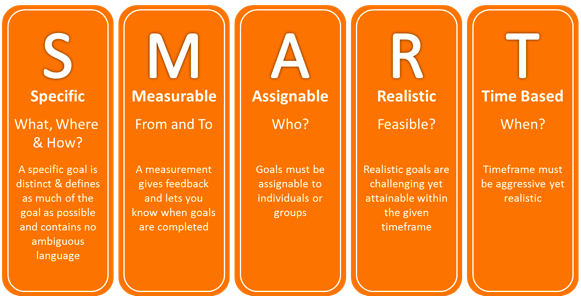
Make it S.M.A.R.T. Communicate with the different parties what they are expected to do, by what date. Then stay on top of it. Micromanage it. That’s how you will notice that a schedule is starting to slip, and that’s how all parties will understand that timing is VERY important.
Once the plan is laid out, look at each step and ask yourself, ‘is it worth the risk, or the extra cost, to take a shortcut here?’
Here are three examples of shortcuts.
Some laboratory tests can be done later – maybe it is fine to do them on the production batch only, and not at all on the development samples. The risk is clear: what to do if production is not compliant?
Instead of doing a small pilot run before mass production is launched, have the factory make a bigger batch. It means many issues will be discovered during that first batch, and many components might have to be scrapped as part of a repair/replace operation.
You might decide to work with some suppliers that are not desirable for the long term, and then switch to them later (once they are ready). This is usually an approach taken with regards to component suppliers, but sometimes also with the assembly & packing factory.
Keep in mind the risks associated with these shortcuts!
There will be times when trying to go faster just does not work. A poor decision can add delays to your project.
For example, one customer was looking to carry out FCC tests for approval of a Bluetooth product. One of the international testing laboratories provided a quotation with a deliverable of four to five weeks. The customer was keen to get this completed quicker, so we found an alternative lab who quoted one to two weeks. The customer was warned about the risks, but went with this lab and ended up paying twice as much (rush fee)… And in the end it took six weeks to complete!
A new product development will always come with unknowns and risks. The more complex the project, the more delays and cost overruns can be expected. You can count on this rule!
However, the good news is that there are solutions to mitigate risks. Add some process (plan in details, stay on top of what happens), work with the right partner, and make calculated bets.
Many importers are looking to hire this type of profile in China:
Can do ‘project management’ and follow up on developments and productions
Can do quality inspections
Can the same person do both? Yes, absolutely.
Do some companies have the same people do both? Yes, and sometimes with success.
Is it easy to set this up? Not without a strong company framework around the employee and close management.
The first obstacle is the differences in typical profiles:
QC inspectors can generally read/write English but are not good at interpersonal communication.
QC inspectors are typically detail-oriented but might not be good at understanding the ‘big picture’ idea (how to manage the supplier etc.).
Project managers need great communication skills, including spoken English, and need to be holistic thinkers.
Project managers are seldom trained in the QC inspection procedure, and it is easy for factories to play games.
The second obstacle is the risk of mixing the two roles:
Sending the same inspector to the factory is not advisable. They might become friends and become too lax (‘you fed me well and picked me up many times, so I’ll under-report this issue’) or they might hate each other and clash.
Having the same person handle commercial and quality issues sends a clear signal to suppliers: these issues are linked. The natural tendency of Chinese suppliers is to mix everything up and you should not encourage it. Otherwise, be ready to hear “quality is not great but the price was low”.
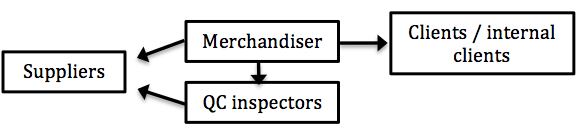
A team of 1-3 merchandisers (the word means different things in different industries, but generally they do what some call project management) follow up on some orders.
A few inspectors work ONLY on that team’s orders.
Merchandisers spend 1-2 days a week in factories, together with inspectors.
QC inspectors are in factories nearly all the time and might come to the office on Monday morning (for example).
 Tough negotiations of payment terms with Chinese suppliers